Kepler’s reflection depicts something ancient and elemental. Geometry isn’t just a collection of shapes or rules. It is a language that emphasises structure, balance, and cosmic order. For centuries, humans have used geometry to comprehend the world. In many cultures, geometry evolved into more than just a tool. It evolved into a means of connecting the physical and spiritual realms. This concept is the foundation of a mandala tattoo.
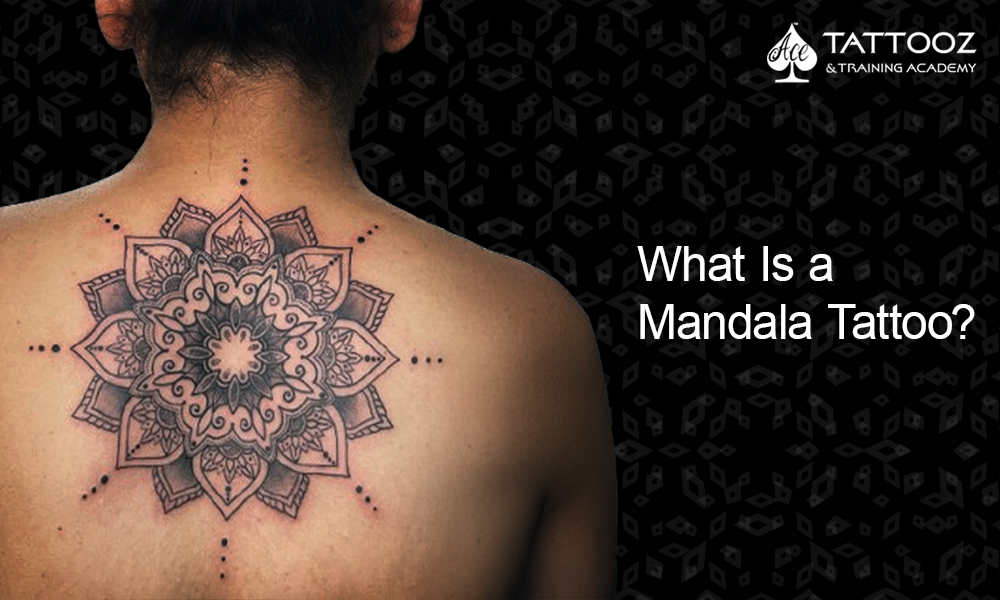
A mandala is a geometric pattern designed around a central point. It repeats and radiates outward, creating a sense of tranquil symmetry. When inked on the skin, a mandala tattoo is both personal and universal. It conveys centuries of meaning while allowing for individual expression.
The word “mandala” comes from Sanskrit. It means “circle”. Mandalas have appeared in spiritual and cultural traditions across Asia for more than two thousand years. They are central to Hinduism and Buddhism, where monks use them as meditation tools. In these traditions, each line and curve reflects the order of the universe.
The circle at the centre often represents wholeness. Patterns grow around it in balanced layers. This structure mirrors the cosmos, where everything revolves in harmony. In temples and monasteries, mandalas appear in paintings, carvings and sand art. Monks sometimes spend days creating intricate sand mandalas, only to sweep them away after a ritual. The act reflects the impermanence of life.
Over time, these patterns travelled far beyond their original cultural settings. Artists, spiritual seekers and tattoo enthusiasts adopted the designs. Today, the mandala tattoo is one of the most recognisable geometric tattoos in the world.
A mandala tattoo is defined by structure. Every line and shape connects with intention. Unlike many figurative tattoos, which show a specific image or symbol, mandala tattoo design is about balance and pattern.
A classic mandala starts with a circle. Around it, the artist builds layers of triangles, petals, dots or squares. Each shape adds rhythm. When complete, the design appears both simple and complex. It feels as if it has always existed.
This is part of its appeal. People are drawn to these tattoos not only for their beauty but also for the quiet sense of order they hold. Whether someone chooses a large back piece or a small mandala hand tattoo, the design often gives the same feeling: centred, steady, harmonious.
The beauty of a mandala tattoo lies in its precision. Each line must be aligned with the others. Each curve must reflect the pattern around it. Skilled artists frequently begin with a central point and work outward layer by layer. They use compasses and stencils for guidance but rely on their own judgement for the finer details.
Three common techniques shape these tattoos:
A simple mandala tattoo design may only include linework, keeping the pattern minimal and airy. More elaborate designs combine dotwork and shading to create a mandala that almost appears to breathe.
Mandala tattoos work on many parts of the body. Popular placements include the forearm, upper arm, chest, back and thigh. A mandala hand tattoo is especially striking. The hand’s shape frames the circular pattern, making it appear like an extension of the body’s natural lines.
Smaller tattoos often highlight a single pattern with a clear centre. Larger tattoos can expand across the back or chest, forming complex mandala tattoo designs with multiple layers. Some people choose a simple mandala tattoo design for a quiet personal mark. Others prefer full, detailed mandalas that make a statement.
The style can be pure black ink or include colour. Blackwork focuses on contrast and clarity. Colour adds mood and symbolism. Each choice changes the way the tattoo feels.
Every mandala tattoo carries both personal and shared meaning. The pattern itself links to centuries of tradition. Yet the choice of placement, size and detail makes it individual. Some people choose designs inspired by Buddhist or Hindu art. Others work with an artist to build something entirely their own.
This duality is what gives mandala tattoos their lasting appeal. They are both ancient and modern. They belong to a collective language of geometry, yet they adapt easily to a personal story.
A simple mandala tattoo design may seem modest at first glance. But its clean lines and open spaces often reveal the form most clearly. These tattoos focus on proportion and balance. They can be placed on small areas like the wrist, hand or ankle.
A more complex design uses multiple layers. It may spread across a large area, such as the back or thigh. These tattoos can include dozens of repeating shapes. The effect is almost architectural. Choosing between simple and complex depends on how much visual weight the wearer wants the tattoo to carry.
Mandala tattoos demand precision. A small misalignment can throw off the entire pattern. That is why it matters to find a tattoo artist who specialises in geometric work. A good artist will have a steady hand, an eye for symmetry and a deep respect for these patterns.
Before choosing, review portfolios. Look for consistency in linework, smooth curves and balanced layers. Talk to the artist about your idea. A clear conversation will help translate your vision into a design that works with your body’s shape and natural flow.
When Kepler wrote about geometry as divine, he was describing something beyond numbers and shapes. He was describing a structure that underlies everything we see. Mandalas carry that same quiet power. They speak through patterns rather than words.
A mandala tattoo is not just decoration. It is a personal alignment with a universal idea. Whether someone chooses a large piece or a simple mandala tattoo design, the message often remains the same: there is order beneath the surface, a rhythm that holds the world together.
Depending on the design, it can range from a simple circle worn on the wrist to a multi-layered necklace. The design principle of balance, structure, and quiet harmony is reflected in both forms. This is geometry brought to light. It serves as a constant reminder of the external and internal worlds.
When Kepler wrote about geometry as divine, he was describing something beyond numbers and shapes. He was describing a structure that underlies everything we see. Mandalas carry that same quiet power. They speak through patterns rather than words.
A mandala tattoo is not just decoration. It is a personal alignment with a universal idea. Whether someone chooses a large piece or a simple mandala tattoo design, the message often remains the same: there is order beneath the surface, a rhythm that holds the world together.