

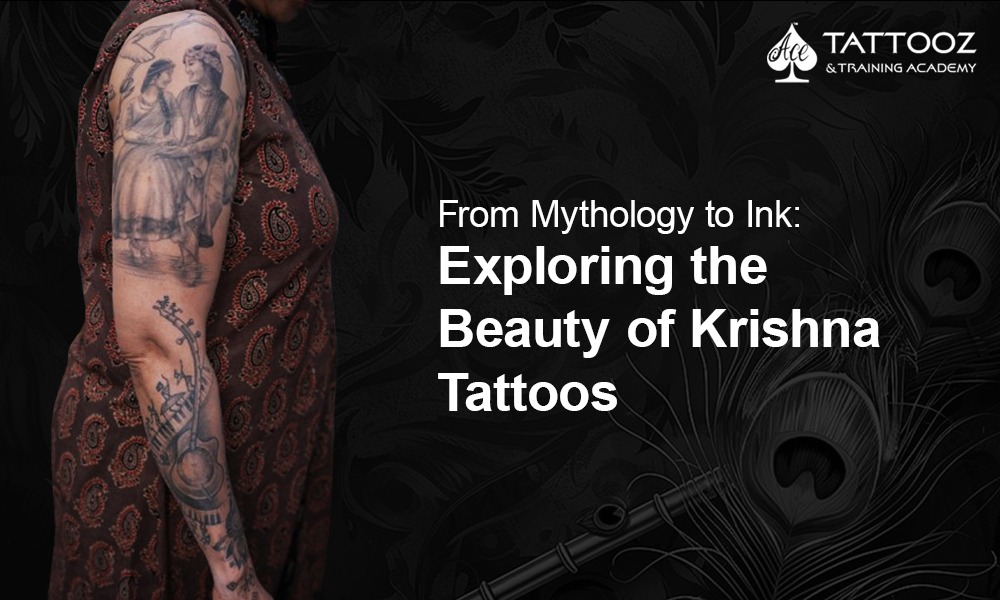
From Mythology to Ink: Exploring the Beauty of Krishna Tattoos
Ink has long carried stories, faith, and identity. Among the many designs chosen to rest on human skin, few hold the quiet power of a Krishna tattoo. It carries the weight of centuries of myth, art, and devotion. Whether sketched in fine lines or filled with bold detail, it speaks of grace and serenity.
A Living Myth
Krishna is not only a figure from mythology. He is a living presence in songs, rituals, and memory. His image sits at the centre of many homes across India. The blue-skinned god with a flute has shaped entire traditions. A Krishna tattoo draws from this deep well of meaning. It brings a piece of this mythology into the present, where ink turns belief into personal expression.
For some, the image serves as a reminder of devotion. For others, it represents values like love, playfulness, and strength. The tattoo often becomes both a shield and a soft echo of a story told many times before.
The Symbol of Radha and Krishna Tattoo
Many people choose the Radha Krishna tattoo as a symbol of divine love. In these designs, Radha stands beside Krishna. Their gaze often meets in quiet recognition. The scene holds more than romance. It carries the idea of love beyond human measure, of a connection that exists outside time.
These tattoos work well on the upper arm, forearm, or back. Some choose intricate work that mirrors miniature paintings. Others prefer fine outlines that capture only the essence of their bond. Both styles hold the same quiet strength.
The Flute as a Sign of Calm
The flute Krishna tattoo has its own language. In myth, Krishna’s flute calls people to him. It speaks of peace, joy, and surrender. A tattoo of the flute can carry this sound in silence. It fits well on the wrist, the forearm, or near the collarbone. The shape of the flute, often wrapped in peacock feathers or beads, brings a graceful line to the design.
Those who choose the flute often seek a design that is simple yet powerful. It becomes a subtle nod to their faith or a gentle reminder of inner stillness.
The Peacock Feather and What It Holds
The peacock feather, or krishna mor pankh tattoo, is one of the most common symbols tied to Krishna. He wears a feather on his crown. It carries beauty, pride, and lightness. On skin, it often curves with the body’s shape, sitting on the forearm, shoulder, or ankle.
Artists use the feather to play with shades of blue and green. Some keep it monochrome, letting fine lines do the work. Others bring in colour to reflect its natural brilliance. A feather may seem small, but it can hold deep meaning.
Tattoos on the Hand
Many choose a Krishna tattoo on hand because of its visibility. The hand moves through the world, always seen, always present. When Krishna rests there in ink, he becomes part of daily life. Designs vary from small flutes and feathers to full portraits. The hand allows both detail and simplicity.
A Shri Krishna tattoo on hand is also a statement. It tells others that faith is not tucked away. It lives in plain sight, on skin that meets the world every day.
Style and Form
A Krishna design allows many interpretations. Some prefer fine line work. Others choose detailed portraits. Black ink often gives the design a timeless quality, but colour can bring the god to life. The soft blue of his skin, the green of the feather, and the gold of his ornaments can turn a tattoo into a small painting.
Placement plays a role in how the tattoo feels. The back allows space for larger scenes, such as Krishna and Radha by the river. The arm or hand suits smaller, more personal designs. Many choose to keep the tattoo simple. A single flute or feather can say as much as a full portrait.
Faith Worn Lightly
A god tattoo can be personal or shared. For some, it is a public declaration of belief. For others, it is private, hidden beneath fabric, close to the skin. In either case, it becomes a quiet part of the wearer’s story.
Unlike objects that can be removed, tattoos stay. This gives the act of choosing a Krishna design a certain weight. It is both spiritual and artistic, sacred and human.
A Story Without Words
Krishna tattoos do not rely on grand statements. They whisper. They hold songs, stories, and silence all at once. They connect past and present. They let mythology breathe in a modern world.
The ink does not turn the skin into scripture. It turns it into a canvas. A Krishna tattoo, whether of Radha and Krishna together, a flute, or a single peacock feather, carries a simple truth. Faith can live lightly and still hold great depth.
Each tattoo is a story, not only of a god but also of the person who wears it. If you want to get the best Krishna tattoo, Ace Tattooz is the best tattoo studio in Mumbai. Book a consultation today.
FAQ
A Radha Krishna tattoo frequently depicts divine love and harmony. Many people choose this design to symbolise a deep bond or spiritual connection inspired by the timeless story of Radha and Krishna.
A flute Krishna tattoo looks great on the wrist, forearm, or collarbone. These placements highlight the design while remaining subtle and meaningful.
A Krishna Mor Pankh tattoo represents beauty, grace, and devotion. The peacock feather is a powerful visual element associated with Krishna’s crown, often reflecting a calm and spiritual energy.
Yes. Aesthetic tattoos for men and women share the same foundation: simplicity and intention. Men typically favour geometric or abstract motifs, whereas women may prefer delicate lines or organic shapes. The design’s appeal stems from its subtlety rather than its gendered form.
No, they do not. Krishna tattoos can be black and grey for a classic look or full of colour to reflect traditional imagery. Both are beautiful and have the same spiritual meaning.