

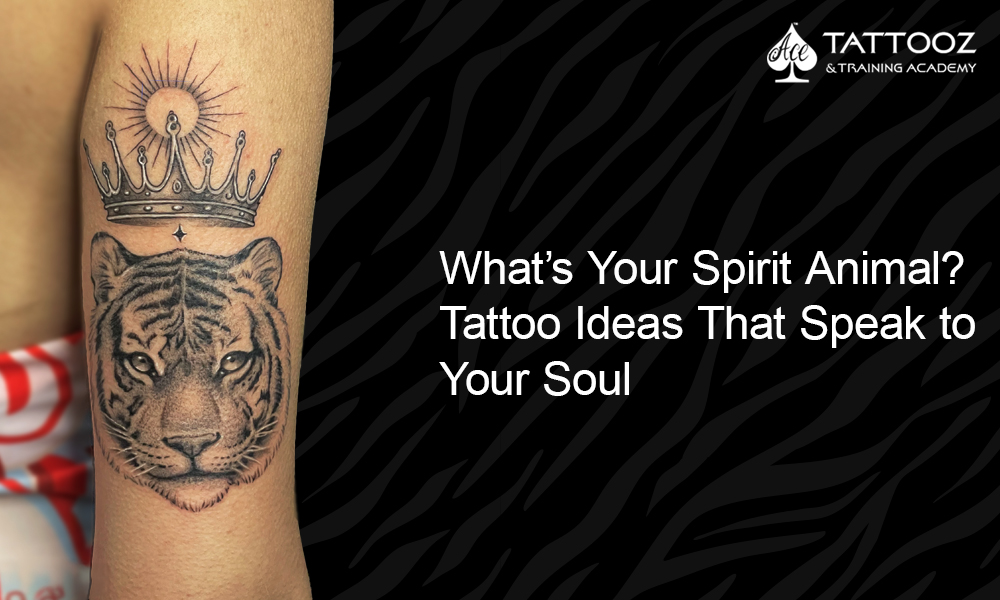
There is something ancient about the way people choose tattoos. Despite our modern machines and sterile studios, the act itself retains a quiet ritualism—ink entering skin to tell a story that no words could convey. One of the most enduring of these stories is the spirit animal tattoo. It is not a passing fad; it represents connection, intuition, and the unspoken bond between the self and nature’s vast intelligence.
The concept of a spirit animal predates the invention of ink and needle. Throughout history, humans have looked to animals for guidance, protection, and inspiration. A wolf could represent loyalty and instinct, an owl wisdom and mystery, and a lion courage and dominance. These are not arbitrary interpretations. They emerge from our observations of how these creatures hunt, move, nurture, and lead. When someone wears such an image on their skin, they are essentially asking to borrow its spirit.
The Power Behind the Symbol
A spirit animal tattoo isn’t a decoration. Its declaration. It tells the world—and perhaps reminds the wearer—of what lies within. It says, “This is the energy I walk with.” Some people find theirs through meditation, others through dreams, or simply through quiet self-recognition. The process itself can be intimate, a slow peeling back of identity until the animal steps forward.
An artist once said that choosing your spirit animal is like looking in a mirror that reflects your soul, rather than your face. The reflection may surprise you. Someone drawn to a snake might not see deception but renewal—the way a snake sheds its skin to grow. Someone who chooses a raven might feel at home in its intelligence and quiet defiance of convention.
Ink as Modern Totem
Tattooing makes spiritual recognition permanent. Traditionally, warriors and shamans carried animal symbols as a form of protection. Today, the same action has become personal armour. The ink acts as a bridge between the physical and metaphysical realms—between who we are and who we are yet to become.
Walking into a tattoo studio in Mumbai will reveal artists reimagining the spirit animal in a variety of styles. Some examples of fine-line minimalism include a single feathered outline that suggests flight without revealing wings. Others use bold realism, layering colours and textures until the fur appears alive. Each stroke represents a translation—between human and animal, intention and expression.
The most remarkable designs frequently combine subtlety and depth. A fox could be rendered using geometry, emphasising its cunning through shape rather than snarl. A tiger could emerge from abstract brushstrokes, with its stripes fading like smoke. The beauty is in how personalised it becomes. No two spirit animal tattoos are alike because no two spirits communicate in the same way.
The Process of Finding Yours
Before deciding on a design, many people consider what they are drawn to, both emotionally and aesthetically. Are you seeking strength, transformation, calmness, or curiosity? Your animal counterpart often reflects your inner needs.
A wolf appeals to people who value loyalty and community. It is the spirit of selfless leadership, guided by instinct and connection.
A butterfly belongs to those who embrace change. It’s a gentle reminder that growth necessitates surrender.
A bear represents resilience. It carries solitude with grace and defends with quiet strength.
An elephant represents wisdom and memory, grounding those with stories too big to forget.
A raven is appropriate for thinkers and poets who exist somewhere between the visible and the invisible.
This is not mythology in the strictest sense. It’s emotional jargon. Each creature becomes a metaphor for a way of life, a reminder of qualities we want to cultivate or reclaim.
From Design to Meaning
Once the animal is chosen, the next step is how to embody it. Placement, scale, and style shape the conversation between tattoo and body. A large back piece might suggest a desire to carry the animal’s full presence; a small wrist symbol, a whisper of its energy.
Style too has its language. Traditional Japanese tattoos often interpret the koi fish as a symbol of perseverance against fate. Polynesian tattooing could turn a turtle into an emblem of protection and voyage. In Nordic symbolism, a stag might embody rebirth and royal dignity.
Modern studios are becoming more adept at combining traditional and contemporary techniques. Watercolour tattoos, for example, add a dreamlike fluidity to animal imagery, whereas dotwork and mandala designs incorporate sacred geometry. The effect can be timeless, with elements of both art and invocation.
The Personal and the Cultural
Of course, there is always a discussion about cultural respect. Spirit animals are deeply important in Indigenous traditions, and appropriating those beliefs without understanding their origins can feel hollow. The key is intention. Personal reflection rather than fashion trends should inspire a spirit animal tattoo. It’s more about listening to your own language than borrowing from another culture’s.
For many, the goal is to honour rather than imitate—to reconnect with the natural intelligence that civilisation has often forgotten. In a world obsessed with speed and screens, selecting an animal as a guide can be a form of silent rebellion. It says, “I still believe in symbols.” I still believe that the wild has something to teach me.
The Masculine Archetypes
While spirit animal tattoos are gender neutral, certain symbols have become classic tattoo designs for men. The lion, for example, symbolises dominance, courage, and leadership. The eagle represents vision: the ability to see far and act precisely. The bear symbolises endurance and protection, whereas the wolf represents the strength of loyalty and brotherhood.
These designs emphasise responsibility over power for its own sake. They represent balance: the ability to lead without losing empathy, to fight without losing motivation. In this sense, each tattoo functions as both a moral compass and an aesthetic choice.
Beyond Skin
Tattoos fade slightly with time, lines soften, colours shift, but the meaning deepens. A spirit animal tattoo does not age; rather, it becomes more worn in. It becomes a part of the individual’s story, adding layers of memory. The day it was inked could represent a transformation, a recovery, or a promise to oneself.
When asked about it years later, the response might be a smile: “It reminds me of who I wanted to be.”
Perhaps this is what makes these designs so quiet. They connect us not only to other animals, but also to our own evolution. They remind us that we, too, are creatures of instinct and mystery, straddling the line between civilisation and wilderness.
In the End
The best tattoos are not chosen; rather, they reveal themselves. Your spirit animal is not a trend to follow; it is a truth to acknowledge. Perhaps it prowls, soars, or watches silently from a branch. But it is there, waiting for you to listen.
And when you finally do, when you bring it to life in ink and skin, you’ll realise what countless others have before you: art does more than just decorate the body. It speaks to the soul.
FAQ
A spirit animal tattoo represents an individual’s connection to the characteristics or energy of a specific animal. It expresses the wearer’s inner world, which includes strength, freedom, courage, and wisdom. Each animal sends a distinct message: the wolf represents loyalty and instinct, the owl wisdom and mystery, and the tiger strength and resilience. For many people, this tattoo becomes a spiritual symbol that helps them stay grounded and inspired. It’s less about fashion and more about authentic self-expression.
Introspection is the first step towards finding your spirit animal. Ask yourself which animals you’ve always been drawn to and why. Meditation, dreams, or everyday patterns can all help people discover their spirit animal. Others notice similarities between their personality and certain animal characteristics, such as strength, adaptability, or calmness. You can also look into cultural symbolism and mythology to see what resonates. Finally, your spirit animal should feel like a reflection of your soul, rather than a design chosen at random.
Some of the most popular spirit animal tattoo designs include wolves for loyalty, lions for courage, eagles for freedom, and bears for strength. The owl is often associated with wisdom, whereas the butterfly represents transformation and rebirth. Many artists bring these creatures to life in unique ways, ranging from fine-line minimalism to bold realism or watercolour techniques. The best spirit animal tattoos are deeply personal—each design tells a unique story about the wearer’s emotions, experiences, or growth.
The placement of the tattoo depends on how you want to express your connection to the animal. A large piece on the back can signify strength and protection. At the same time, a smaller design on the wrist or collarbone can convey subtlety and thought. You can show both bravery and emotional depth with a tattoo on your chest. Some people even get tattoos of spirit animals on their forearms to help guide them. The important thing is to choose a place that feels natural and meaningful to you, and ensure that the art complements your movement and energy.
Yes, spirit animal tattoos are deeply spiritual and culturally significant. The concept of spirit animals stems from Indigenous and ancient traditions, in which animals were regarded as guides and protectors. Today, many people use them as symbols of personal strength, transformation, or connection to nature. It’s critical to treat these tattoos with respect and understanding, rather than as a fashion statement. When chosen carefully, a spirit animal tattoo can be a lifelong reminder of balance, purpose, and identity.